



Reason for the Season. Family or Jesus?
-

- January 15, 2026
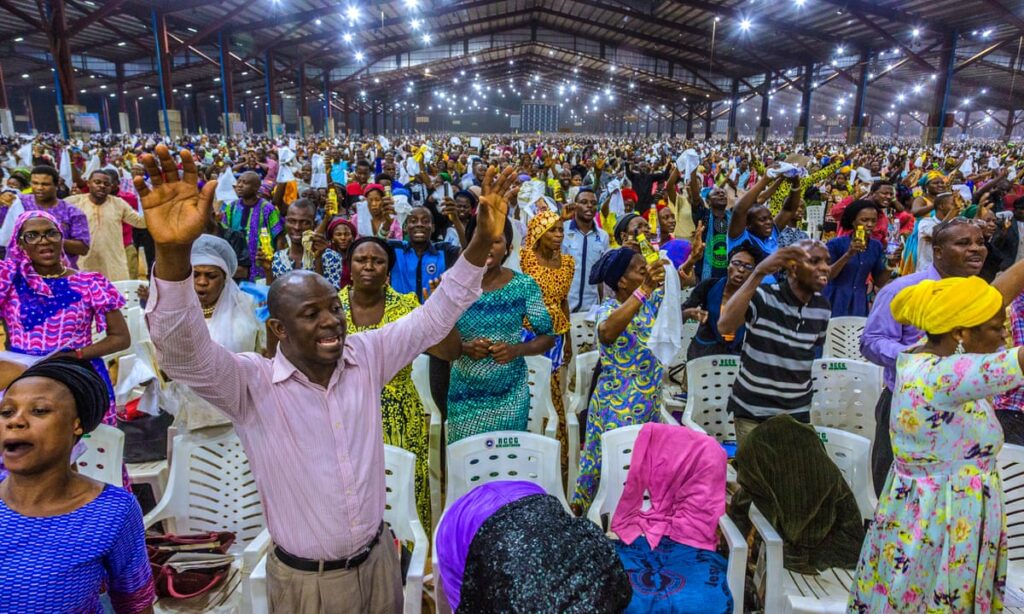
I remember the first time I spent a New Year’s Eve (NYE) away from the church, and how it felt. In Nigeria, it’s just not something you do—the significance of entering the new year in God’s presence is generally considered vehement. Churches are often packed, and it does not matter if you have not been worshipping all year; there should be no reason you miss church on “crossover” night. So growing up, I would always go to church with my family to observe the crossover night. And although we went to church at least three days a week, all 52 weeks of the year, the crossover was an unquestioned tradition. As I grew older, I began to share my time between God and a budding social life—I would go to church on the 31st night and shout Happy New Year! In the Lord’s presence, then speed off to the Bar Beach to watch the Lagos Countdown carnival and party with my favourite music celebrities as morning crept in. Eventually, I would abandon both traditions altogether, but I remember the year I stopped. 
Back home, the fear of missing out—FOMO is a valid reason why most people go to church on New Year’s Eve. And that is the entire country’s shared tradition, at least for the Christian half of it. If I grew up in New York, I’d have fancied being one of over a million people gathered in freezing temperatures for the iconic Times Square Ball Drop—a tradition dating back to 1907. Although it appears less of a festival, more of a mass endurance ritual, it is undeniably iconic and would’ve been my jam.
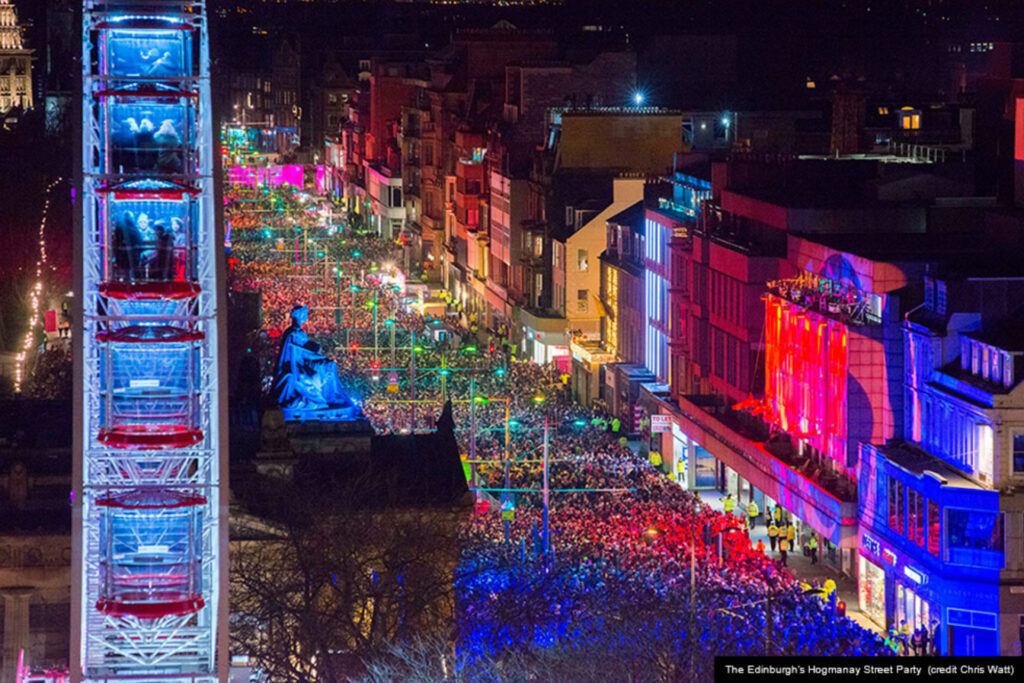
If I were raised in Rio de Janeiro, Brazil, I would be at the Copacabana (Réveillon), one of the largest NYE gatherings in the world. The appeal of dressing in white for peace and renewal, letting off fireworks over the Atlantic, enjoying music and dance performances, and making offerings to Yemanjá (the sea goddess) sounds like the perfect blend of spiritual, chaotic and joyful, and I would have been all over it. Often called the world’s most famous NYE celebration, the Sydney Harbour New Year’s Eve in Australia, centred around the Sydney Harbour Bridge and Opera House, would have been where you’d find me if I grew up in Australia. The fireworks shows are always a spectacle. And just like the Lagos Countdown at the beach was a multi-day festival, if I were Scottish, the Hogmanay Festival in Edinburgh would have been my cup of tea. A massive street party, torchlight processions, concerts and ceilidh dancing all sound like my vibe. 
In comparison, the Nigerian NYE tradition is not as festive, and you can argue that just like on Christmas, the religious approach substitutes secular gathering and partying. One of my biggest culture shocks is how Christmas is celebrated differently in the West. Where the special day is heavily commercialised and all about quality presents-exchanging family time abroad, in Nigeria, it is deeply religious and going to church to celebrate the birth of Jesus is non-negotiable. But that is not magical, is it?
The Nigerian New Year’s Eve tradition is akin to Christmas in that it is another special day that is spent communally in church rather than intimately with family (on Christmas), or more festively (on NYE). It may come across as simplistic and naive, but I think a lot of the rot that blemishes Nigerian society can be directly traced to family dysfunctions at the grassroots level. How many family gatherings do we have that are genuinely about good tidings and vulnerable/visible exchange of love and affection? When people misbehave, a common question to ask is if they are loved at home. Family is our earliest interaction with society, and so it is not rocket science to assume that if one feels loved, seen and heard by their own kin, they are likely to extend that gesture to the outside world. And if they grew up in a cold-hearted habitat where love and affection are not enunciated enough, they are likely to find it tricky to tolerate the world around them.
The Nigerian family unit is starved of intimate gatherings that should otherwise be the focal point of the festive season. Wherever we are in the world, whatever we have been up to all year, however rocky our relationship has been, the final days leading to the new year should be a period of reset, to dole out warm hugs, apologise for any wrongdoings, reaffirm our love and commitment towards each other, hold hands and find optimism for the year together because this is exactly what Jesus would have wanted.

Self-identifies as a middle child between millennials and the gen Z, began writing as a 14 year-old. Born and raised in Lagos where he would go on to obtain a degree in the University of Lagos, he mainly draws inspiration from societal issues and the ills within. His "live and let live" mantra shapes his thought process as he writes about lifestyle from a place of empathy and emotional intelligence. When he is not writing, he is very invested in football and sociopolitical commentary on social media.