


Watch of the Week: Fallout: Season 2
-

- January 16, 2026
In a world without laws, what’s morality worth? Fallout Season 2 leans harder into that question as Prime Video’s adaptation grows darker, stranger and only slightly more focused.
Season 2 of the streaming series — adapted from Bethesda’s long-running video game franchise, injects fresh energy in its latest round, with an expanded setting. But while it shows flashes of the same brilliance, it also exhibits the uneven storytelling that sometimes held Season 1 back.
Set in the late 23rd century aftermath of a nuclear catastrophe, Fallout explores what it means to be human when civil society has collapsed, and ultimately who thrives in a wasteland. At the centre is Ella Purnell’s Lucy MacLean, forced to contend with the surface world after a sheltered lifetime underground in a radiation-proof vault.
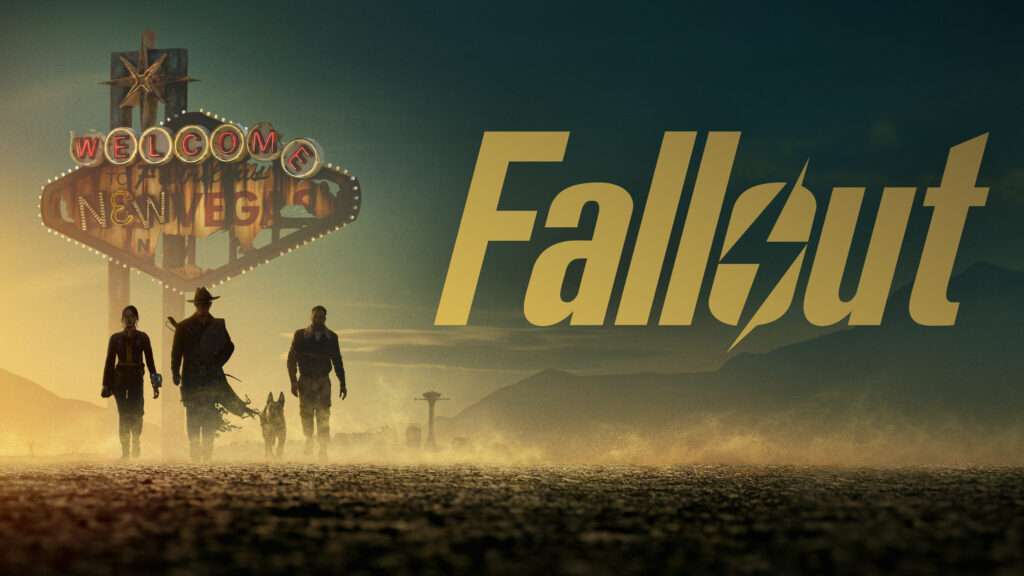
Still serving as the audience’s moral compass, Purnell grounds Lucy with both chirpy optimism and quiet strength, charting the slow collapse of her once-clear sense of right and wrong. Watching her desperately cling to principles in a world built to break them remains one of the steadier through lines in this batch of episodes.
But it’s Walton Goggins as the nuclear-irradiated Ghoul — a bounty hunter hardened by centuries of survival, who once again provides the show’s real emotional heft, with intertwining flashbacks lending further insights into his pre-apocalypse life as screen star Cooper Howard (as well as the sequence of events leading to the apocalyptic scenario we currently find ourselves in).
“Empathy is like mud,” says the Ghoul at one point, “you lose your boots in that stuff.”
This weary truth exemplifies the central push and pull between Cooper’s hardened cynicism and Lucy’s fragile idealism.
Kyle MacLachlan again impresses as Lucy’s father Hank, shedding the affable “vault dad” persona with last season’s closing twist. MacLachlan imbues Hank with a cheerful malevolence, giving the character an unnerving complexity — terrifying when he’s calm, downright scary when he smiles.
One of the season’s stronger plotlines involves the corporate conspiracy within the vault societies. As secrets about their creation and purpose unfold, each episode probes deeper into the power dynamics at play in the postapocalypse, in the process offering a more insidious political edge to contrast with the overt brutality of the surface world.
Shifting from the fallout of the first season’s finale into the Mojave Desert and eventually the neon chaos of New Vegas, the season juggles several initially disparate plot threads. Momentum rises and falls depending on which character’s story is in focus. The tendency to veer into side stories also occasionally slows the pace, making some episodes feel like a scavenger hunt cluttered with unnecessary detours.
While the supporting actors — including Aaron Moten as wayward knight errant Maximus and Frances Turner in flashbacks as Cooper’s wife Barb — all add to a patchwork of characters and environments, the sprawling nature of the storytelling means some get shorter shrift than others. Still, the sprawl helps create an ever-expanding, unpredictable world.
All told, Fallout remains messy and violent in its second season, but the intrigue and new mysteries largely retain the interest of longtime fans and newcomers. Anchored by strong performances (especially from Goggins and MacLachlan) and a willingness to grapple with broader questions about human nature and power, it remains a rare video game adaptation that treats its source material seriously while still remembering to have some fun.

Boluwatife Adesina is a media writer and the helmer of the Downtown Review page. He’s probably in a cinema near you.